

Detection and Prevention Before It Happens
📌 Introduction
In the previous article, we discussed in detail how to identify and fix network problems, focusing on practical steps to diagnose and resolve issues efficiently. However, relying solely on fixing problems after they occur is no longer sufficient in today’s fast-paced business environment.
In fact, modern organizations are shifting toward a more advanced concept known as Proactive Network Management. In other words, instead of waiting for issues to arise, businesses continuously analyze network performance to detect early warning signs before they turn into major problems.
Therefore, in this article, we will take a deeper look at how to analyze networks professionally, as well as explore the most effective tools and techniques that help prevent failures before they happen, ensuring business continuity and optimal performance.
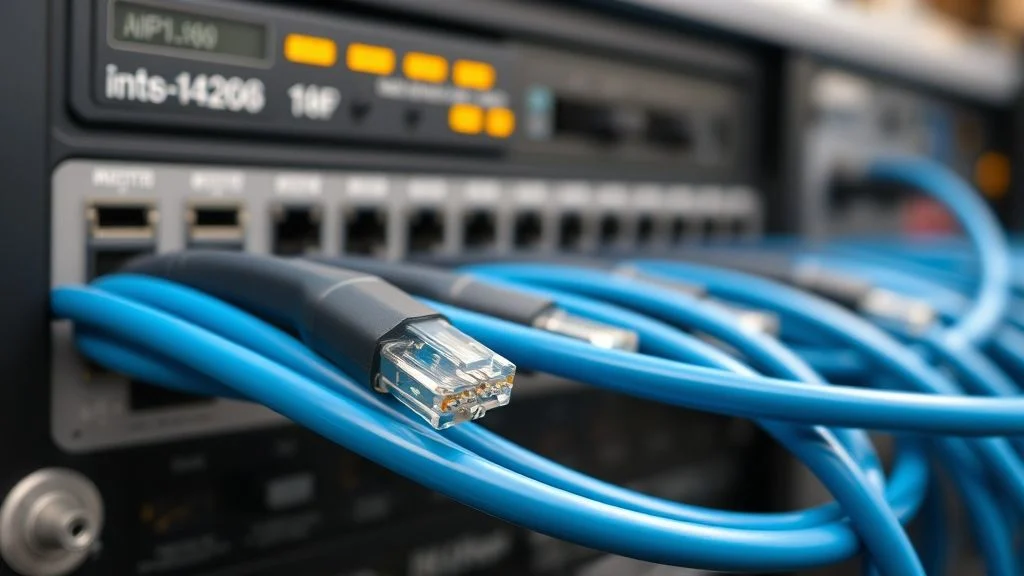
🧠 The Difference Between Fixing Problems and Preventing Them
On the other hand, it is essential to understand the fundamental difference between traditional and modern approaches to network management.
Previously, the focus was on
- 1
Detecting problems after they occur
- 2
Identifying the cause
- 3
Applying a fix
However, today the focus has shifted
- 1
Continuous performance monitoring
- 2
Predicting potential issues
- 3
Data analysis
As a result, this represents the difference between a Reactive approach and a Proactive approach.
Moreover, organizations that adopt proactive strategies often experience fewer outages, improved performance, and a better user experience.
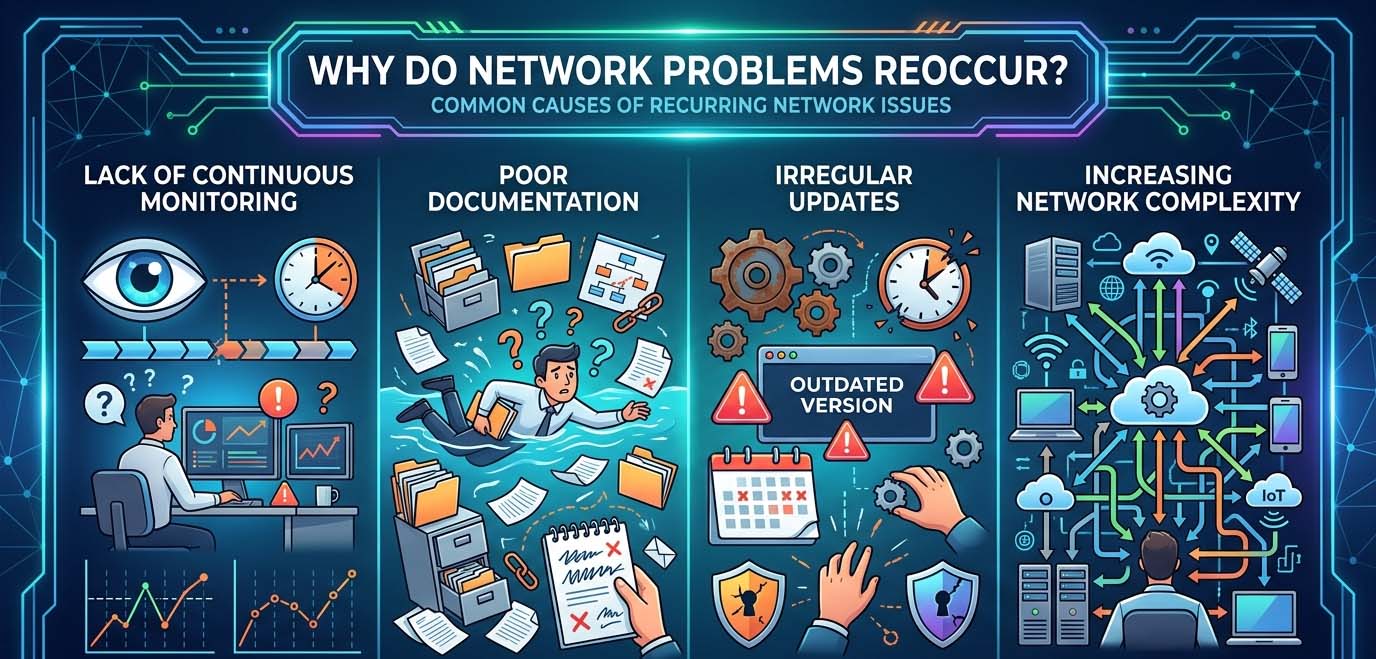
⚠️ Why Do Network Problems Reoccur?
Despite resolving issues, many network problems tend to reappear. Therefore, understanding the root causes is crucial.
🛠️ Advanced Network Troubleshooting Techniques
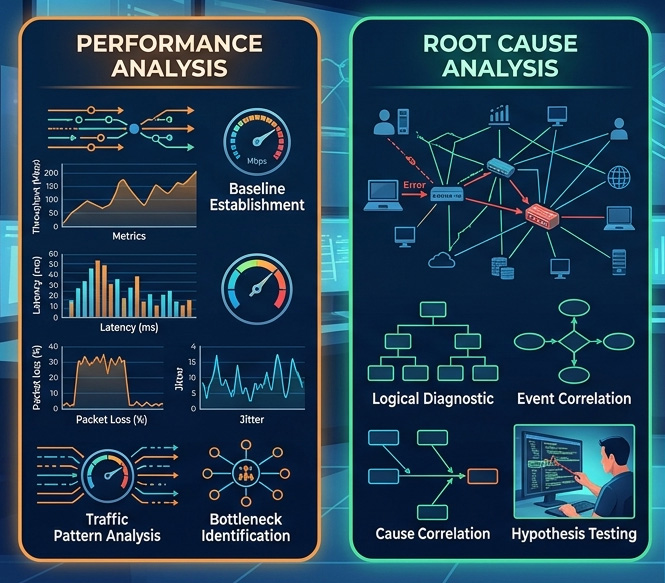
🚨 Common Advanced Network Issues
In reality, several complex issues require advanced troubleshooting, including:
Therefore, handling these issues requires in-depth analysis rather than basic quick fixes.

🧩 Best Practices to Prevent Network Problems

📊 How to Transform Your Network into a Smart System
Today, advanced organizations rely on intelligent systems to manage their networks. For example:
⚙️ Automated monitoring solutions
⛁ Data analytics tools
✅ Smart alerting systems
As a result, the goal becomes clear:
Fix the problem before the user even notices it.
🧾 Conclusion
In conclusion, network management is no longer just about fixing issues—it is about continuous monitoring, analysis, and optimization.
Therefore, adopting a proactive approach helps to:
⏱️ Reduce downtime significantly
👍 Improve overall performance
⚡ Increase productivity
🤝🏻 Enhance customer trust
Ultimately, the more you invest in proactive network management, the more stable and scalable your business operations will become.

Related Articles